
Explore our advanced solutions for HVAC, Mechanical, Electrical, and Automation design. Get in touch today

Commercial Cooling & Food Service

Complete 3D sheet metal assemblies, thermal optimization, and NSF/NFPA compliant layouts for retail display and kitchen ventilation.

Specialized Engineering Services

Equipment Design & Refrigeration Engineering

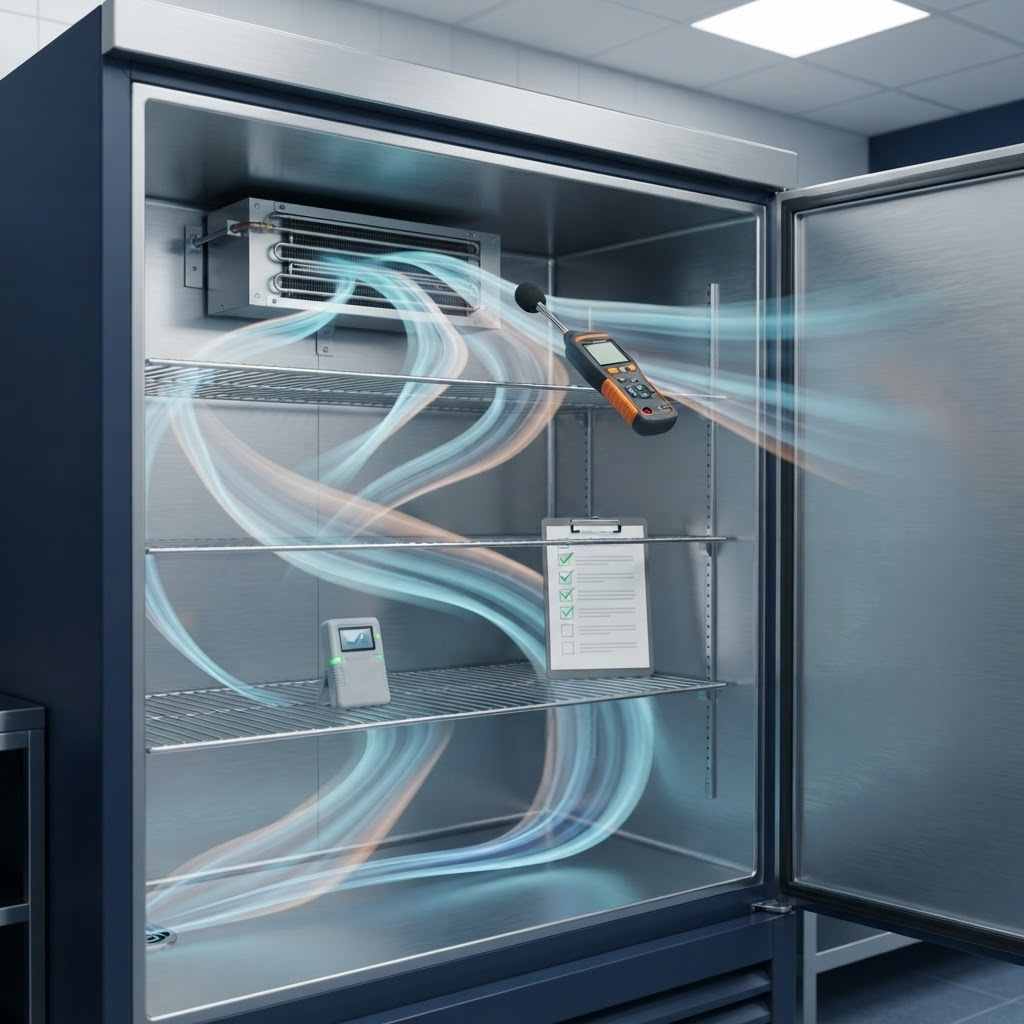
Equipment design and refrigeration engineering covers the core 3D modeling, refrigeration integration, and thermal engineering work behind commercial cooling and food service equipment. Asset-Eyes builds these systems from initial 3D assembly through refrigeration coordination and thermal performance, so equipment functions reliably under continuous commercial use.
3D Assembly Development
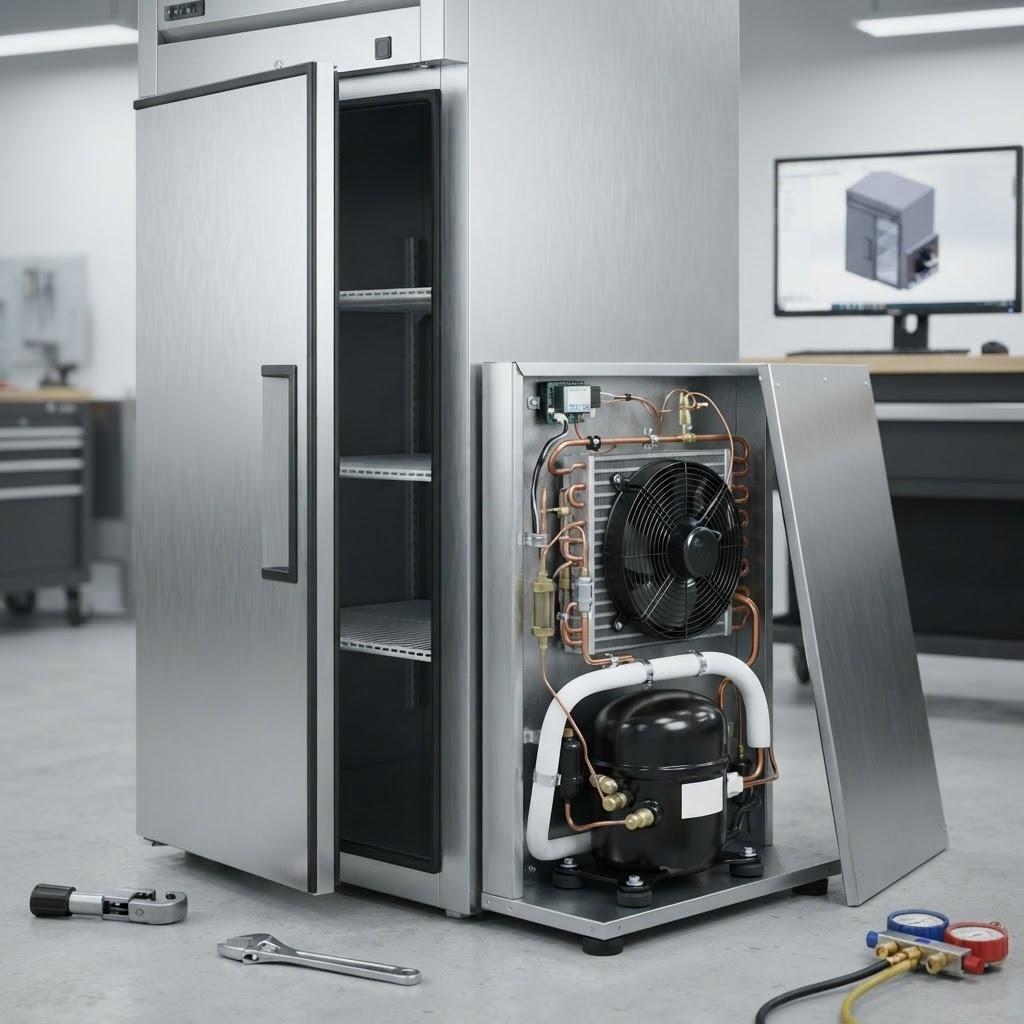
Asset-Eyes develops comprehensive 3D assemblies for commercial cooling and food service equipment using SolidWorks and AutoCAD. These assemblies capture the full mechanical structure of the equipment before it moves into manufacturing. Asset-Eyes builds these models to support downstream engineering work, including refrigeration integration and fabrication planning.
Refrigeration System Coordination
Asset-Eyes coordinates refrigeration systems within equipment designs to ensure seamless operational integration between cooling components and the surrounding structure. This includes aligning refrigeration hardware placement with the equipment's mechanical and thermal design. Asset-Eyes handles this coordination as part of the core equipment engineering process, not as a separate add-on scope.
Insulation and Thermal Performance Engineering
Asset-Eyes engineers insulation performance to optimize thermal efficiency and energy retention in commercial cooling equipment. This work directly affects the equipment's operating cost and cooling consistency over its service life. Asset-Eyes factors insulation performance into the design at the assembly stage rather than treating it as an afterthought.
Equipment Layout and Maintenance Accessibility
Asset-Eyes designs equipment layouts with integrated component accessibility and maintenance provisions built into the arrangement. This ensures technicians can access key components for servicing without redesigning the equipment after the fact. Asset-Eyes treats maintenance access as a design requirement from the start of the layout process.
Equipment Design & Refrigeration Engineering

Airflow & Regulatory Compliance

Airflow and regulatory compliance covers the engineering work that keeps commercial cooling and food service equipment safe, code-compliant, and effective at controlling air, grease, and environmental conditions. Asset-Eyes applies airflow calculations and industry standards directly to equipment design rather than treating compliance as a final review step.

Capture Velocity Calculation
Asset-Eyes calculates capture velocity for commercial cooling equipment to ensure effective airflow and contaminant control. This calculation determines how well an exhaust or ventilation system pulls contaminants away from the cooking or processing area. Asset-Eyes applies these calculations during the design stage so the equipment meets performance requirements before fabrication.
Grease Management System Integration
Asset-Eyes integrates grease management systems into both equipment and facility designs for food service applications. This includes designing the equipment to work with grease containment and removal requirements specific to commercial kitchen environments. Asset-Eyes coordinates this integration between the equipment design and the surrounding facility layout.
ASHRAE Standards Application
Asset-Eyes applies ASHRAE standards and guidelines to design and performance requirements for commercial cooling equipment. This ensures the equipment meets recognized industry benchmarks for ventilation, airflow, and thermal performance. Asset-Eyes builds these standards into the design process rather than validating against them after the fact.
Air Curtain Device Placement
Asset-Eyes integrates air curtain device placement into equipment designs for environmental and performance control. Air curtain positioning affects how well the equipment maintains temperature separation and contains airflow in the target zone. Asset-Eyes determines placement based on the equipment's specific airflow and containment requirements.
Airflow & Regulatory Compliance

Manufacturing & Production Engineering

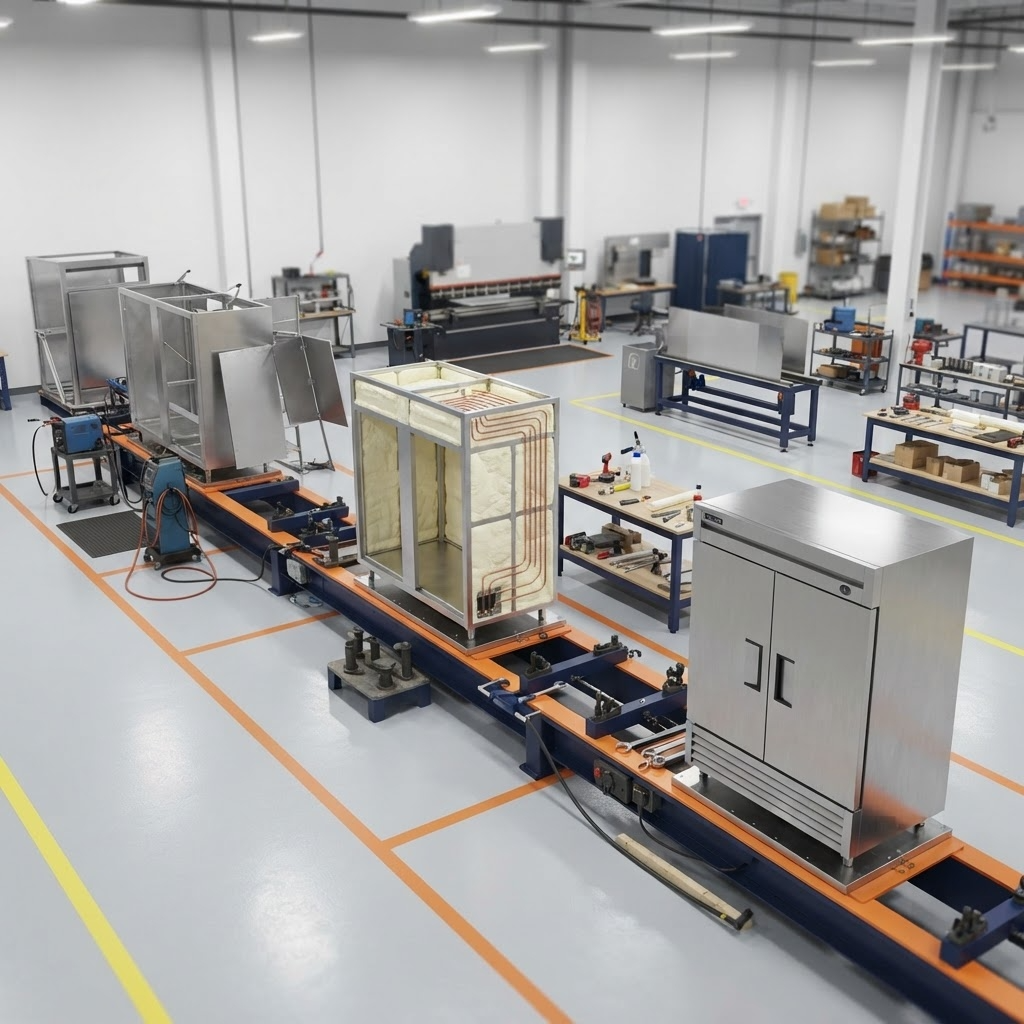
Manufacturing and production engineering covers the work that turns a completed equipment design into a producible, quality-controlled product. Asset-Eyes integrates fabrication processes, assembly sequencing, and quality control requirements into the design so equipment can move into production without redesign.

Fabrication Process Integration
Asset-Eyes integrates fabrication processes into equipment designs to ensure manufacturability and production efficiency. This means the design accounts for how the equipment will actually be built, not just how it functions. Asset-Eyes evaluates fabrication feasibility as part of the design process itself.
Assembly Sequencing
Asset-Eyes engineers structured assembly sequences that support efficient manufacturing and installation of commercial cooling equipment. This defines the order and method in which components come together during production, reducing rework and bottlenecks on the line. Asset-Eyes designs these sequences to work for both factory assembly and field installation.
Quality Control Integration
Asset-Eyes integrates quality control requirements throughout the design and production workflow, rather than applying them only at final inspection. This means quality checkpoints are built into the design and manufacturing process from the start. Asset-Eyes structures this integration to catch issues earlier in production.
Component Specification and Sourcing
Asset-Eyes provides detailed component specification and sourcing support for procurement and manufacturing. This includes defining the exact components required for the equipment build so procurement teams can source accurately. Asset-Eyes ties this specification work directly to the equipment's design and fabrication requirements.
Manufacturing & Production Engineering

Documentation & Presentation Standards

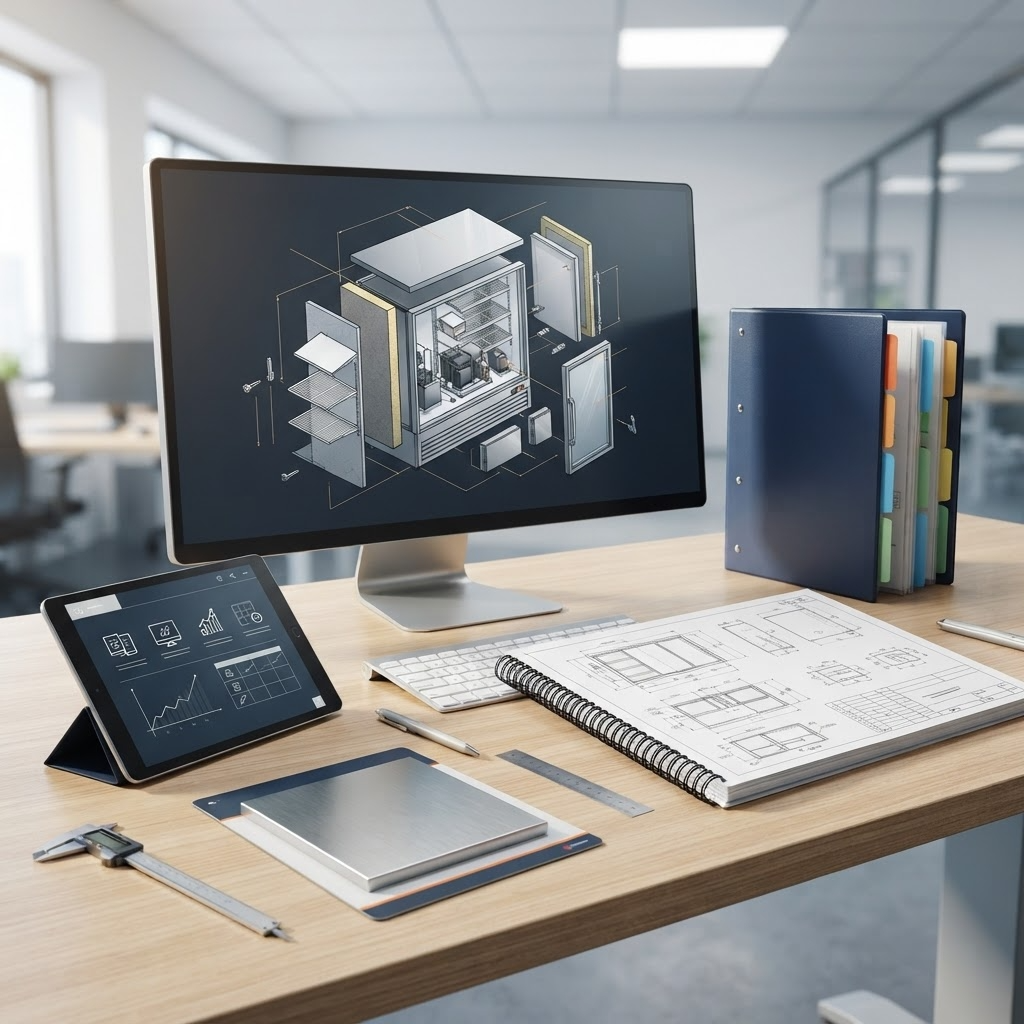
Documentation and presentation standards cover the manufacturing paperwork and visual specifications that support consistent production and equipment presentation. Asset-Eyes produces fabrication drawings, assembly instructions, and display specifications built for direct production use without requiring field interpretation.

Fabrication Drawings
Asset-Eyes produces detailed fabrication drawings for accurate manufacturing and assembly of commercial cooling equipment. These drawings give production teams the exact dimensions and specifications needed to build the equipment correctly. Asset-Eyes builds these drawings to match the finalized 3D assembly and design intent.
Assembly Instructions and Manufacturing Documentation
Asset-Eyes develops assembly instructions and procedures for consistent production execution, and creates comprehensive manufacturing documentation enabling production consistency without interpretation or field adjustment. This documentation is built so production teams can follow it directly, without needing to make judgment calls during the build. Asset-Eyes treats this as a core deliverable of the design process, not a secondary handoff document.
Display and Presentation Specifications
Asset-Eyes defines display requirements, lighting specifications, and visual presentation standards for commercial food service equipment. This applies to equipment where visual presentation, such as merchandising displays, is part of the functional requirement. Asset-Eyes builds these specifications alongside the equipment's core engineering requirements.
Documentation & Presentation Standards
Engineering Tools

Machine Design Engineered To Perform

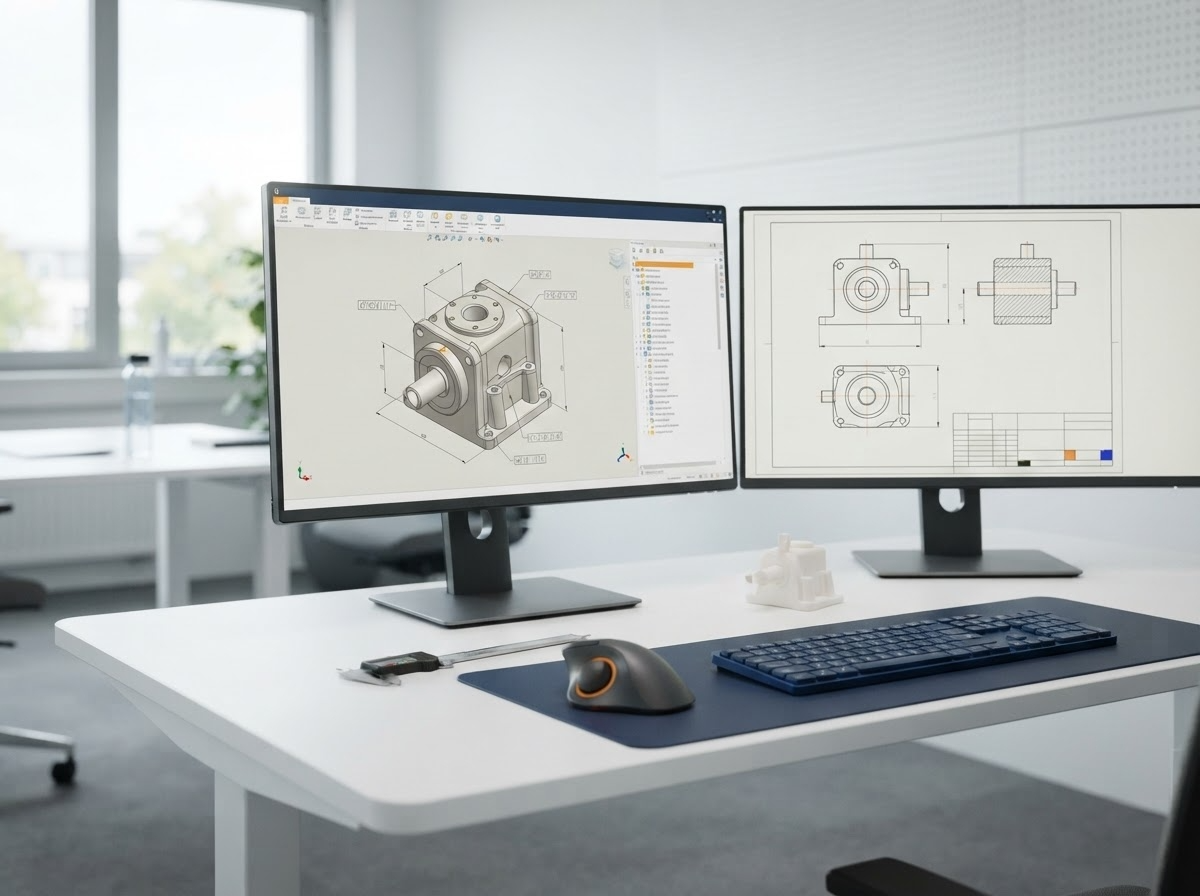
Automation machine design is exclusively a 3D process at Asset-Eyes. We utilize industry-leading CAD environments to guarantee compatibility and seamless translation to the factory floor.
Engineering Tools
1

SOLIDWORKS

SOLIDWORKS is used to develop mechatronics systems from beginning to end. At the initial stage, the software is used for planning, visual ideation, modeling, feasibility assessment, prototyping, and project management. The 3D modeling software is then used for design and building of mechanical, electrical, and software elements.
2

AutoCAD

AutoCAD is our primary design tool for controls engineering (electrical, fluid power) and the latest software versions are always utilized. We use the AutoCAD Electrical Toolset for the creation of controls drawings. The use of AutoCAD Electrical Toolset improves efficiency, reduces errors, and essentially creates a smart design package.
3

Additional Software Competence

For manufacturers standardizing on alternative platforms, our team maintains full functional design workflows in Autodesk Inventor and PTC Creo Parametric, ensuring full design history, parametric constraints, and drawing format compliance.

Resources

Let's Talk About Your Engineering Needs

Tell us where your team needs more capacity. We'll show you how our engineers can help.